sustainability & urban infrastructure••5 min read

Hyderabad's Water Crisis: Why Reusing Wastewater is No Longer Optional

A new study reveals that Hyderabad currently recycles only 3.5% of its treated wastewater, falling far short of the 20% benchmark. As the city faces rapid growth and climate instability, scaling up water reuse has become a critical necessity for survival.

Hyderabad's Water Crisis: Why Reusing Wastewater is No Longer Optional

The 3.5% Reality Check

For a city rapidly expanding like Hyderabad, water security is not just an infrastructure challenge—it is an existential requirement. Recent data indicates that the city is currently reusing only 27 Million Liters per Day (MLD) out of 772 MLD of treated wastewater. At just 3.5%, this utilization rate is significantly below the 20% benchmark, highlighting a massive gap between current capacity and the city's actual needs.

The pressure on the city's water table is mounting. Between uncontrolled urban sprawl, high-rise development, and shifting rainfall patterns potentially exacerbated by El Niño, the city's heavy reliance on external water sources and tankers is becoming increasingly unsustainable.

The Path Toward a Circular Water Economy

Transitioning to a circular water economy requires more than just building treatment plants; it demands a fundamental shift in how cities manage water resources. Experts point to several strategies that could help Hyderabad bridge the gap:

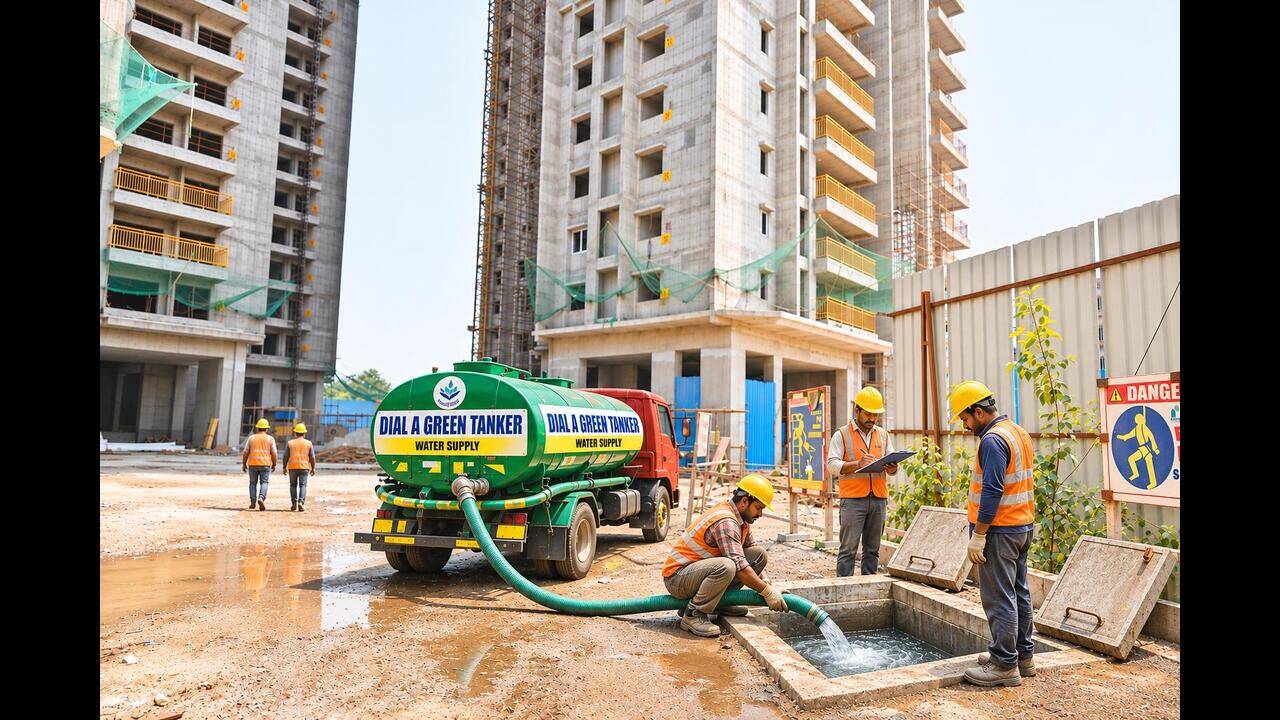
Rapid urban growth in Hyderabad has placed unprecedented strain on local water resources.

The Broader Impact of Water Reuse

Water reuse is not merely about conservation; it is about resilience. By reducing the demand for fresh, untapped water, cities can create a buffer against environmental volatility. Onsite reuse, in particular, prevents nutrient loading in local streams and lessens the burden on aging centralized sewage infrastructure.

Cities that are ahead in adopting these practices aren't just protecting their water sources, but they're leading the way in solving some of the biggest environmental challenges of our times.

— Operational Research, Springer Nature

Looking Ahead

While the HMWSSB has initiated efforts such as green tankers and industry supply to boost reuse rates, the city remains at a turning point. As demonstrated by global sustainability benchmarks—where institutions like IIT Delhi are increasingly focusing on water conservation research—the integration of technology and policy is the only way forward to ensure a secure water future for Hyderabad’s residents.

Key Takeaways

  • Hyderabad currently recycles only 3.5% of its treated wastewater, missing the 20% efficiency target.
  • Rapid population growth and climate instability are putting massive pressure on the city's groundwater and water supply chains.
  • Decentralized treatment systems can reduce costs and increase the viability of reusing water locally.
  • Circular water strategies, including industry incentives and smart governance, are critical to long-term urban resilience.
  • Reducing reliance on freshwater extraction is essential to surviving future environmental shifts like El Niño.

FAQ

Why is Hyderabad’s low water reuse rate a concern?

It signals a massive underutilization of treated water that could otherwise offset the city's heavy reliance on groundwater and external supplies, leaving the city vulnerable to climate shocks.

What is a circular water economy?

It is a framework where treated wastewater is treated as a resource rather than a waste product, being reused for industry, irrigation, and other purposes instead of being discarded.

How can industries help improve water reuse?

Industries can adopt onsite treatment, participate in water-credit trading schemes, and partner with local governments to shift toward sustainable water intake.

What are the biggest hurdles to widespread water reuse?

Primary hurdles include regulatory inconsistencies, high upfront capital costs for infrastructure, and a lack of public awareness regarding the safety and benefits of treated water.

Related Videos

How Do Wastewater Treatment Plants Work?

Concerning Reality

Inside Guelph's Wastewater Treatment Plant | City Infrastructure Film

Memory Tree

Inside Hyperion: How L.A. Transforms Wastewater

LA THIS WEEK

Sources