A Celestial Boat in a Sea of Gas
For decades, the red supergiant Betelgeuse has puzzled astronomers with its erratic behavior and mysterious brightness cycles. While theories ranging from massive convection cells to dense dust clouds have been proposed, researchers at the Center for Astrophysics | Harvard & Smithsonian (CfA) have finally pinned down the culprit: a hidden companion star named Siwarha.
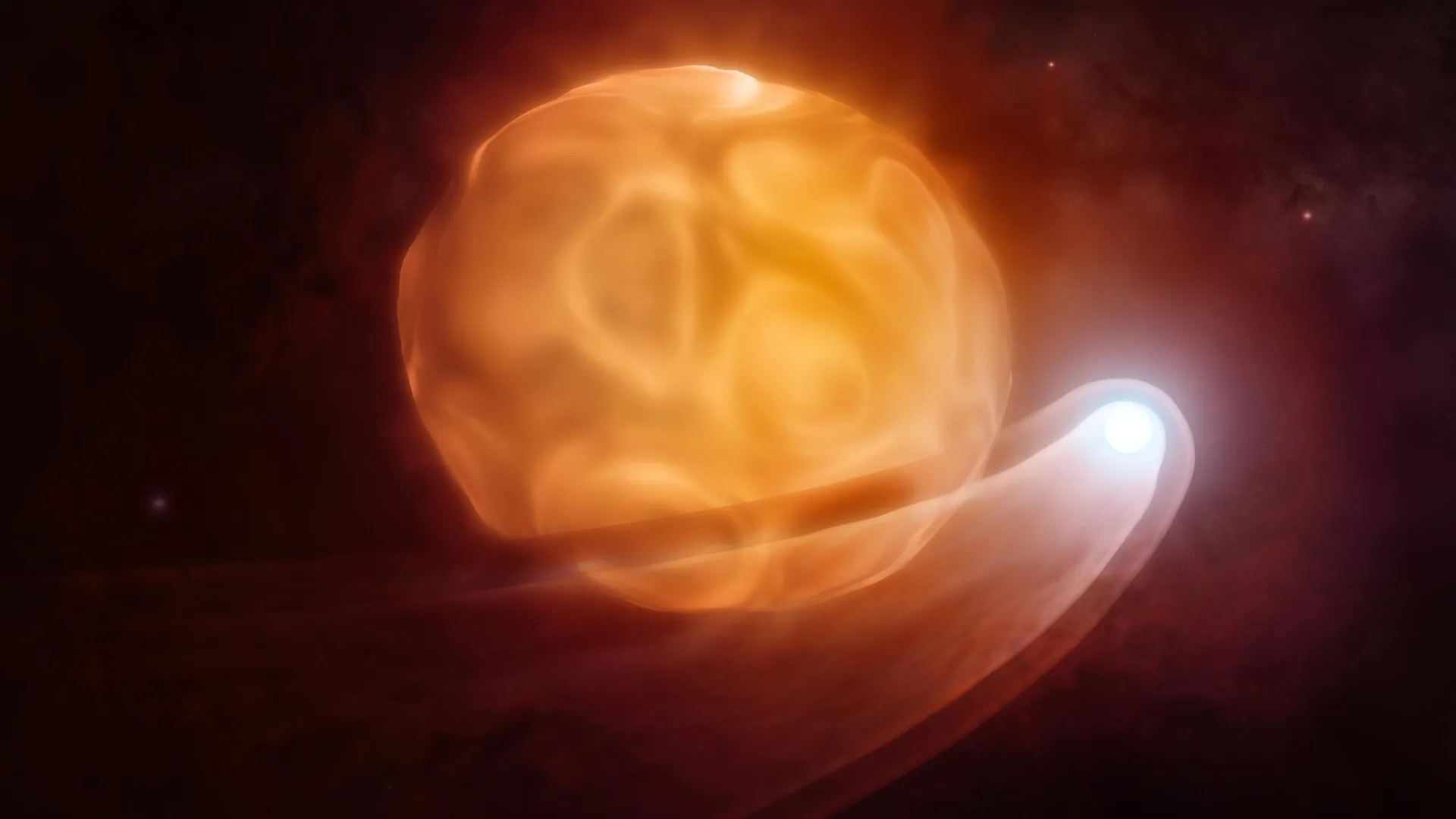
Using observations from NASA’s Hubble Space Telescope and various ground-based observatories, scientists have detected a distinct 'wake' of gas trailing behind Siwarha as it travels through the outer reaches of the supergiant’s vast atmosphere. This movement creates a ripple effect, much like a boat moving through water, which distorts the light and spectral signatures we observe from Earth.
Why This Matters for Astronomy
The confirmation of Siwarha provides a definitive explanation for the long-term variability that has long-baffled scientists. Because the companion is orbiting deep within the supergiant's extended atmosphere, its periodic transit creates measurable changes in the spectrum of light emitted by the star.
- The companion star, Siwarha, creates a dense stream of gas that creates ripples in Betelgeuse's atmosphere.
- The interaction explains long-term brightness changes that were previously attributed to internal stellar activity.
- Every six years, the trail becomes particularly visible when Siwarha passes between Betelgeuse and Earth.
- Future observations are already scheduled for 2027 to capture more data during the companion's next alignment.
For the first time, we're seeing direct signs of this wake, or trail of gas, confirming that Betelgeuse really does have a hidden companion shaping its appearance and behavior.
— Andrea Dupree, Astronomer at the Center for Astrophysics | Harvard & Smithsonian
What Comes Next?
While the mystery of the star's variability is largely solved, a new question has emerged: what role will Siwarha play when Betelgeuse eventually ends its life in a supernova? Astronomers are now investigating if the presence of this companion could influence the evolution of the red supergiant in its final stages. With the next ideal viewing window arriving in 2027, the scientific community is preparing for a new era of observation into one of the night sky's most iconic stars.