technology policy••4 min read

Why the Trump Administration is Replacing 'AI' with 'Super Intelligence'

President Donald Trump has directed federal agencies to stop using the term 'Artificial Intelligence' in favor of 'Super Intelligence.' The change is part of an executive order aimed at rebranding the technology to better reflect its modern capabilities.

Why the Trump Administration is Replacing 'AI' with 'Super Intelligence'

A Shift in Language

In a significant move affecting federal communications, President Donald Trump has initiated a plan to formally retire the terms "Artificial Intelligence" and "AI." The administration aims to replace these long-standing industry standard terms with "Super Intelligence" and its abbreviation, "SI." This mandate, which centers on official documents and executive branch correspondence, seeks to pivot away from what the President has described as an "inaccurate" and "bad" descriptor for rapidly advancing technology.

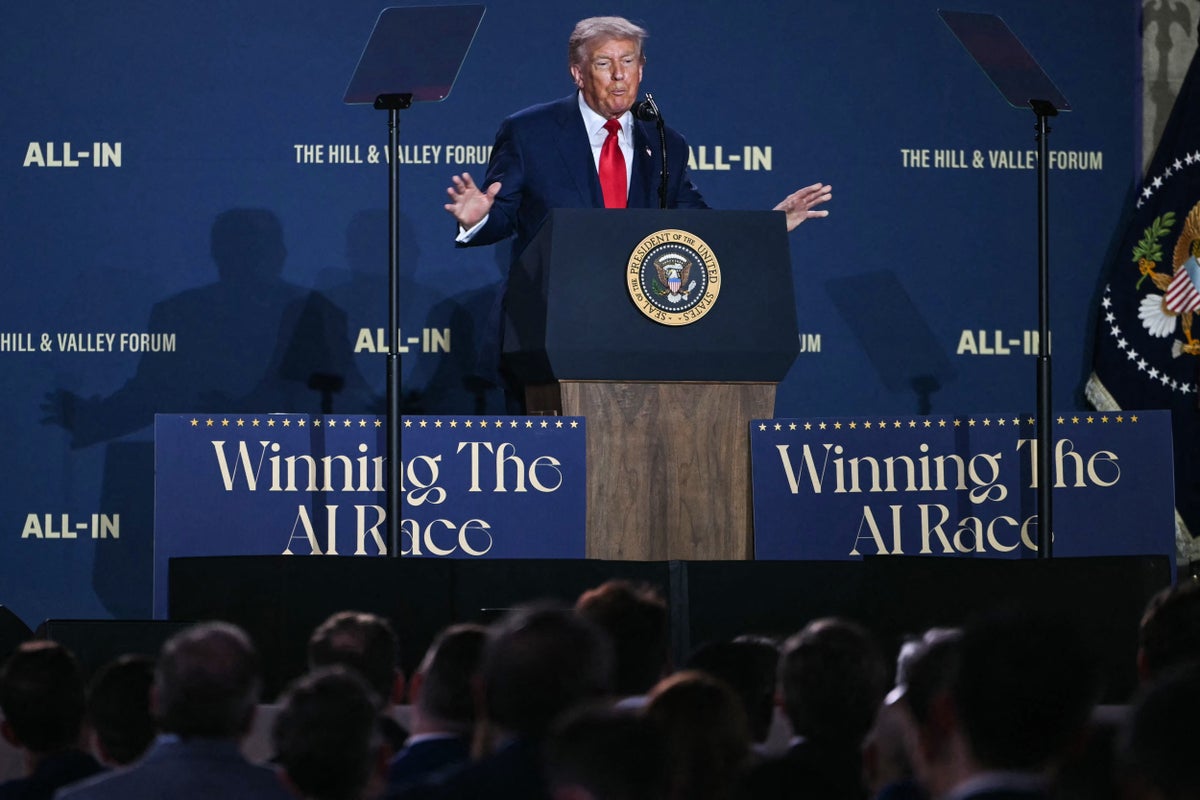
President Donald Trump speaking on his administration's new terminology mandate.

The Mechanics of the Rebrand

The transition was formalized through an executive order issued on September 30. Under this directive, federal agencies are instructed to adopt "Super Intelligence" (SI) in all new relevant documentation. While the order does not require the retroactive modification of existing contracts, archives, or regulations, it sets a new baseline for future government reporting and policy discussions.

  • Primary terms 'Artificial Intelligence' and 'AI' are to be phased out in executive branch communications.
  • New preferred nomenclature is 'Super Intelligence' and 'SI'.
  • The policy applies to new documents; legacy contracts and archives are exempt from immediate revision.
  • The administration argues the new term better captures the technology's current promise and potential.

Impact and Controversy

The administration's stance is that "Super Intelligence" is a more modern and accurate reflection of the current state of technology. However, the move has drawn scrutiny from various sectors. Critics argue that the rebranding effort serves as a distraction from deeper industry issues, including the environmental impact of data centers and broader concerns surrounding economic stability and safety.

The term ‘Super Intelligence’ more appropriately captures the promise, potential, and rapidly advancing capabilities of these technologies.

— Executive Order, September 29

Key Takeaways

  • President Trump has ordered federal agencies to replace 'Artificial Intelligence' with 'Super Intelligence'.
  • The policy change was enacted via an executive order dated September 30.
  • The directive applies to all new official federal documents and communications.
  • Legacy documents and existing contracts are not required to be retroactively updated.
  • The administration contends 'Super Intelligence' better characterizes the technology's current capabilities.

FAQ

What is the new term for AI in federal documents?

The new preferred term is 'Super Intelligence', often abbreviated as 'SI'.

Does this change affect old government contracts?

No, the executive order does not require retroactive changes to existing contracts, regulations, or archives.

When did this mandate go into effect?

The executive order directing the change was issued on September 30.

Why is the administration changing the term?

The administration states that 'Super Intelligence' better reflects the promise and rapidly advancing capabilities of the technology compared to 'Artificial Intelligence'.

Related Videos

OpenAI exec responds to Trump rebranding AI as 'super intelligence'

CNN

Trump shrugs off warnings of widespread AI harm

NBC News

AI researcher tells Trump 'they're lying to you' after he calls AI fears a 'hoax'

CNN

Sources